Why Learn From Real Teachers Still Matters
A short video can show you how to pronounce a difficult word, solve an equation, or correct a guitar chord. But the moment you try it yourself, the real questions appear: Why does this rule apply here? What am I missing? How should I practice next? When you learn from real teachers, those questions have somewhere useful to go.
Educational videos are a great starting point. They make it easier to discover a subject, test your interest, and pick up a practical idea in a few minutes. Real learning often needs more than a clear explanation, though. It needs feedback, context, and someone who can respond to the way you learn.
What real teachers add to the learning process
A teacher does more than deliver information. They notice patterns in your work, identify the step that is causing trouble, and adjust the explanation. A programming instructor may see that a learner understands syntax but struggles to break a problem into smaller parts. A language tutor may recognize that the issue is confidence in speaking, not vocabulary. A music teacher may spot tension in a student's hand position before it becomes a habit.
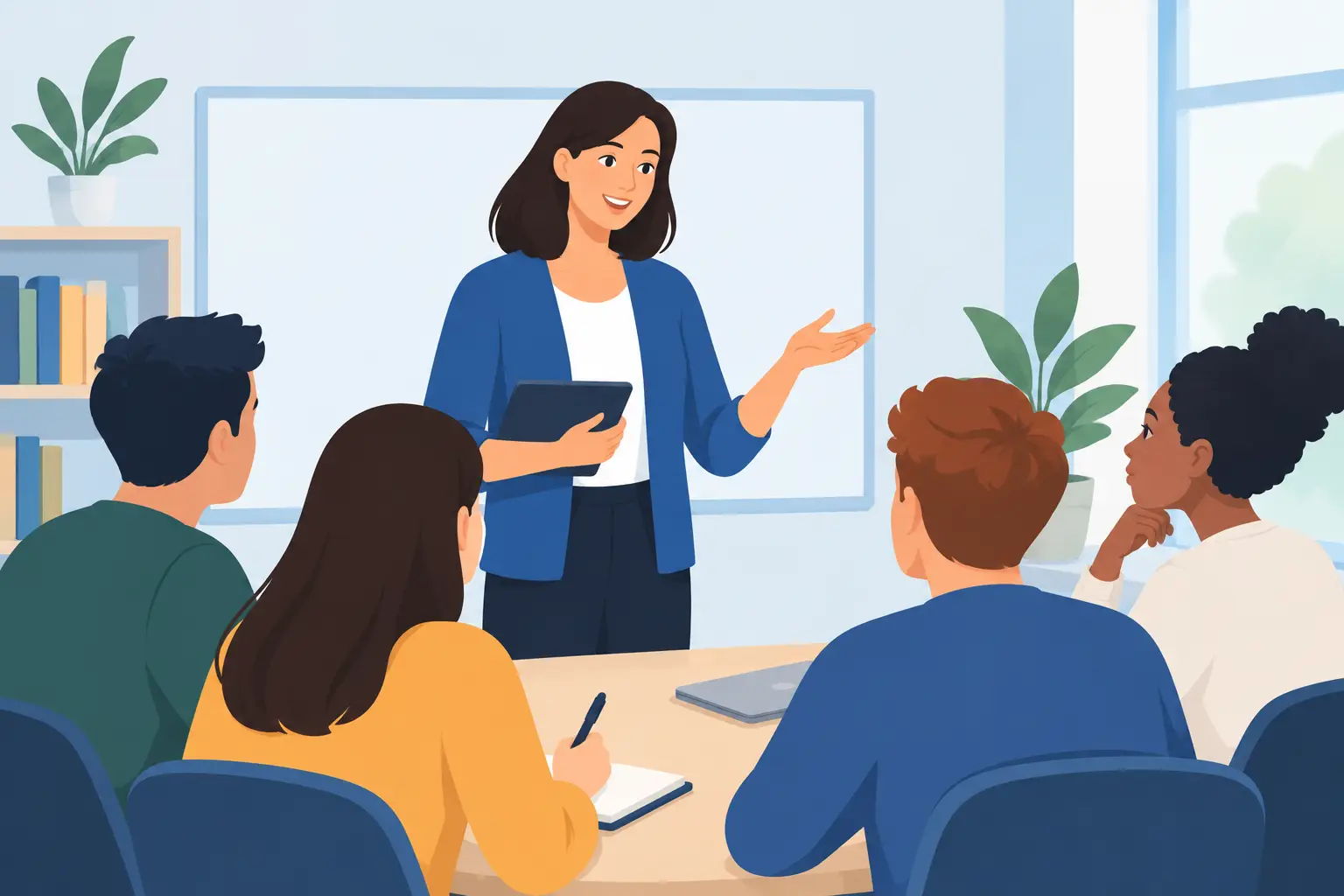
That kind of guidance is difficult to get from a general lesson alone. A video must speak to many people at once. A teacher can speak to one person, or to a small group working toward a shared goal.
This does not make short-form educational content less valuable. It gives it a clear role. A useful video can introduce a concept, answer a focused question, or help learners decide whether an instructor's teaching style fits them. The next step can be a private lesson, a group class, or a conversation that turns interest into a plan.
Learn from real teachers when progress needs direction
Some subjects are easy to sample independently. You can watch a short lesson on basic yoga alignment, color theory, or spreadsheet formulas and put the idea to work right away. Other goals become harder once the basics are over.
Exam preparation is one example. A learner may understand individual topics but still lose points because they misread questions, manage time poorly, or leave gaps in a few core areas. An experienced teacher can review practice work and help prioritize what to study next. That is more useful than simply consuming more explanations.
The same is true for professional skills. Someone learning design may need feedback on a portfolio, not another broad overview of design principles. Someone studying English for work may need practice handling meetings, interviews, or customer conversations. Someone learning fitness may need an instructor to adapt exercises to their starting point and goals.
The value is not that every learner needs constant one-on-one support. It depends on the subject, the learner's experience, available time, and budget. Self-paced learning can work very well for focused topics and motivated learners. Teacher-led learning becomes especially helpful when progress has stalled, the goal has a deadline, or feedback affects the quality of the outcome.
Feedback changes what practice can do
Practice is essential, but repeating the wrong approach can make improvement slower. Feedback gives practice a direction.
A math teacher can see whether an incorrect answer came from arithmetic, a misunderstanding of the concept, or a skipped step. A vocal coach can explain how to adjust breath support in a way that matches what the learner is doing. A coding instructor can help a student read an error message and develop a process for debugging rather than simply providing the answer.
Good feedback is specific and usable. It tells learners what to keep doing, what to change, and what to try before the next session. It also helps them see progress that may be hard to notice on their own.
Choosing a teacher who fits your goal
The best teacher is not always the person with the most advanced credentials or the largest audience. Qualifications and experience matter, particularly for high-stakes subjects, but fit matters too. A learner preparing for an exam needs a different kind of support than a beginner who wants to build confidence in conversational Spanish or start playing piano.
Start with a clear outcome. Instead of saying, “I want to learn programming,” make the goal more practical: “I want to build a simple website,” “I want to understand Python for my class,” or “I want to prepare for a technical interview.” A clearer goal makes it easier to find an instructor whose knowledge and lesson format match what you need.
Then pay attention to how the teacher explains. Short educational videos can be useful here because they offer a real sample of the instructor's communication style. Do they explain ideas in a way you can follow? Do they use examples that make sense? Do they seem focused on helping learners understand rather than rushing through information?
Before booking lessons, consider the format as well. Private lessons offer focused attention and can adapt quickly to individual needs. Group classes can be motivating, more affordable, and helpful when learners benefit from discussion or shared practice. Neither format is automatically better. The right choice depends on the goal and how you learn best.
A better path for teachers and instructors
For teachers, tutors, coaches, and educational creators, short videos can do more than share a quick tip. They can show prospective learners what it feels like to learn with you.
A concise lesson on a common pronunciation mistake, a calculus shortcut with an explanation, or a demonstration of a beginner guitar technique can help the right people find your work. The key is to make the content genuinely useful. Teach one clear idea, use an example, and leave the learner with a next step they can try.
Your content does not need to cover an entire subject in one post. In fact, trying to explain everything at once often makes a lesson less clear. Focus on the questions learners repeatedly ask. What confuses beginners? Where do students usually make mistakes? What small improvement would make their next practice session more productive?
That approach also creates a natural connection between content and teaching services. A learner who benefits from your explanation may want deeper support through a one-on-one lesson or a group class. They are not being pushed toward a generic offer. They have already seen the value of your teaching style and can decide whether the next step fits their needs.
JunoReel is built around this progression: educators can share useful short lessons, build a visible teaching presence, and offer private or group learning opportunities in the same place. Learners can begin with a topic that interests them and continue with a real instructor when they need more support.
Trust grows through clarity, not big promises
Teachers do not need to promise fast results to attract the right learners. Clear expectations build more trust. Explain the level your lesson is for, the skill it covers, and what learners can reasonably work on after watching. If a concept requires prior knowledge, say so. If a learner may need ongoing practice, be honest about that too.
This is especially important for subjects with different starting points. A fitness instructor should account for ability and safety. A language teacher should distinguish between a beginner lesson and advanced conversation practice. An exam tutor should be clear about the material covered and the work learners will need to do between sessions.
Clarity helps learners make better choices, and it helps educators build relationships with students who are ready for their approach.
Make learning a conversation, not a scroll
Useful educational content should create momentum. After watching a lesson, a learner should be able to try something, reflect on the result, and know where to go for help. A real teacher makes that cycle stronger by turning confusion into a question and a question into a workable next step.
Whether you are learning a language, preparing for an exam, improving a professional skill, or teaching what you know, start with one honest question: what would make the next step clearer? The answer may be a short lesson, a practice task, a group class, or a conversation with someone who knows how to guide the work.